Nov 4 2026
eSIM vs physical SIM: which is better for your trip
by Venus Low
Choosing between an eSIM and a physical SIM for travel comes down to how you want to stay connected overseas. An eSIM lets you arrange mobile data digitally before departure, while a physical SIM may provide local calling and SMS services that are useful for longer stays.
When travelling abroad, mobile data helps you navigate unfamiliar places, arrange transport, check hotel bookings and stay in touch with family. Having your connection ready when you land can make the first few hours of your trip much easier, especially when you need directions or transport straight from the airport.
Both options can provide reliable connectivity, but their advantages become clearer when you consider your travel duration, phone compatibility and whether you need a local number. This guide compares eSIM vs physical SIM for travel to help you decide which option makes more sense for your next trip.
eSIM vs physical SIM for travel quick comparison
The main difference between an eSIM and a physical SIM is how you activate your mobile connection. An eSIM is installed digitally, while a physical SIM requires a removable card. Both can provide reliable mobile connectivity overseas, but the better option depends on how you plan to use your phone during your trip.
| Feature | Travel eSIM | Physical SIM |
| Installation | Download and install digitally | Insert a physical SIM card |
| Getting connected | Can usually be prepared before departure | May require purchasing or collecting a SIM |
| Convenience | No physical SIM swapping required | May require removing your existing SIM |
| Device compatibility | Requires an eSIM-compatible phone | Requires a compatible physical SIM slot |
| Internet speed | Supports 4G or 5G depending on the plan and network | Supports 4G or 5G depending on the plan and network |
| Local phone number | Many travel plans are data-only | Local tourist plans often include a phone number |
| Keeping Malaysian SIM active | Possible on compatible dual-SIM devices | Depends on available SIM slots |
| Cost | Depends on destination, data and validity | Depends on local operator and package |
| Ber for | Short holidays, multi-country trips and convenient setup | Longer stays, local calling needs and older devices |
For most Malaysian travellers who mainly need mobile data for navigation, messaging, transport bookings and browsing, a travel eSIM is often the more convenient option. However, if your trip requires frequent local calls, SMS verification or a local mobile number, a physical SIM may be more practical.
Which is better for travel, eSIM or physical SIM?
An eSIM is better for travel when you want to get connected quickly after landing, avoid swapping SIM cards and keep your Malaysian number available on a compatible dual-SIM phone. A physical SIM is better when your phone does not support eSIM, you need a local phone number for calls and SMS, your phone supports two physical SIM cards, or a local operator offers a more suitable package for an extended stay.
For a short overseas holiday, a travel eSIM is often the more convenient choice. You can usually purchase and install it before departure, allowing you to access maps, messaging apps and transport bookings once you arrive. If you are travelling across several countries, a regional eSIM package may also be useful because you can stay connected without purchasing a separate SIM at every destination, provided all the countries are included in your plan.
A physical SIM may make more sense if you are staying overseas for several weeks or months and regularly need local calls, SMS verification or other services that require a local number. It is also the practical option for phones without eSIM support. Neither option is automatically cheaper or faster. Compare the package’s data allowance, validity, network coverage and included services before making your decision.
How eSIM and physical SIM cards work
Both eSIMs and physical SIM cards allow your phone to connect to a mobile network. The main difference is how the mobile subscription is stored and activated.
What is an eSIM?
An eSIM, short for embedded SIM, is a digital SIM that allows your phone to connect to a mobile network without inserting a removable card. Instead of physically replacing your SIM, you install a mobile subscription profile using a QR code, an app or another supported method. Once activated, the eSIM connects to a supported mobile network according to your purchased plan.
For travellers, the biggest advantage is convenience. You can arrange your mobile data before departure and avoid looking for a local SIM card after landing. Many newer smartphones support eSIM technology, although compatibility varies by device model, country of purchase and mobile operator. Some devices also allow you to keep your Malaysian SIM active while using a travel eSIM for mobile data.
However, not every travel eSIM includes ordinary voice calls, SMS or a local phone number. Many international travel packages are designed primarily for internet access.
What is a physical SIM?
A physical SIM is a removable card that allows your phone to connect to a mobile network. When travelling overseas, you can purchase a local tourist SIM from a mobile operator, authorised retailer or airport counter. Depending on the package, it may include mobile data, local calls, SMS and a local phone number.
Physical SIM cards remain useful because they work with many smartphones that do not support eSIM technology. They may also be more suitable for travellers who want a local number or prefer purchasing their mobile package directly from a local operator. However, if your phone has only one physical SIM slot, you may need to remove your Malaysian SIM card to use the overseas SIM.
This can be inconvenient if you need to receive important messages or remain contactable on your Malaysian number.

Key differences between eSIM and physical SIM when travelling
Although both technologies provide mobile connectivity, their differences become more noticeable when you are travelling overseas.
Getting connected after landing
One of the biggest advantages of an eSIM is that you can usually prepare it before leaving Malaysia. Instead of searching for a SIM card counter after a long flight, you can install your travel eSIM while connected to Wi-Fi before departure. Once you arrive, you can activate the package according to its instructions and connect to a supported local network.
A physical SIM may require you to visit a retailer, complete registration and insert the card before getting online. However, some physical tourist SIMs can also be purchased in advance or collected at the airport. For travellers who value convenience, an eSIM often provides a smoother arrival experience.
Mobile data costs and value
There is no universal winner when comparing eSIM and physical SIM prices.
A travel eSIM may offer good value for a short holiday when you mainly need mobile data for navigation, messaging and occasional browsing. A local physical SIM may be more economical for longer stays, particularly when it includes a larger data allowance or local calling services. Rather than comparing the advertised price alone, consider the total package.
Check the data allowance, validity period, supported networks, hotspot availability and any fair-use restrictions. A cheaper package is not necessarily better if it expires before your trip ends or runs out of data halfway through your holiday.
Internet speed and network coverage
An eSIM is not automatically faster than a physical SIM. Both technologies can support 4G and 5G connectivity, depending on your device, mobile operator and selected package. Actual internet speeds depend on factors such as network coverage, signal strength, congestion and package restrictions.
For example, a travel eSIM connected through a roaming partner may perform differently from a physical SIM using a local operator’s network. Before purchasing, check the supported networks and whether coverage is available in the places you plan to visit. This is particularly important if your itinerary includes rural destinations, mountainous areas or locations outside major cities.
Keeping your Malaysian number active
For Malaysian travellers, keeping their existing phone number active can be important for receiving banking one-time passwords (OTPs), important messages or calls from home. On compatible dual-SIM devices, you may be able to use a travel eSIM for mobile data while keeping your Malaysian physical SIM active. This means you do not necessarily need to remove your existing SIM card when travelling.
However, receiving SMS depends on your Malaysian mobile operator and roaming arrangements. Calls, outgoing messages and mobile data usage on your Malaysian line may incur additional charges.
To avoid unexpected roaming costs, set your travel eSIM as the preferred mobile data line and disable data roaming on your Malaysian SIM unless you intentionally need it. Some travel eSIMs require data roaming to be enabled on the travel eSIM line itself, so follow the provider’s instructions.
Local calls and SMS
Many travel eSIM packages are data-only, meaning they do not include a local phone number for ordinary cellular calls or SMS. For most holidaymakers, this may not be a major concern because messaging and internet-based calls can be made through apps such as WhatsApp where supported. However, a local number may be useful if you need to contact businesses through ordinary calls or register for services requiring local SMS verification.
In these situations, a physical tourist SIM with calling and SMS services may be more suitable. Some eSIM packages also include phone numbers and calling services, so always check the actual package rather than assuming all eSIMs work the same way.
Choosing a SIM for short holidays and longer stays
Your travel duration and itinerary can help determine whether an eSIM or physical SIM is more suitable.
Short holidays and weekend getaways
If you’re travelling overseas for a few days, your main mobile needs may include checking directions, booking transport, finding restaurants and discovering trending attractions on social media. A travel eSIM lets you arrange your connection before departure, which can save time after landing. For example, if you’re planning a short getaway to Bangkok or Phuket, you can explore the best eSIM for Thailand to compare data plans and find an option that suits your trip.
This is especially helpful when you have a packed itinerary or want to head straight to your accommodation.
Travelling across multiple countries
For a holiday involving several countries, changing physical SIM cards at every destination can become inconvenient. Some travel eSIM providers offer regional packages covering multiple destinations under one plan. This may allow you to stay connected across borders without purchasing a new SIM at every stop.
However, check the exact countries included, validity period and supported networks before buying. If China is part of your itinerary, our guide to the best eSIM for China can help you understand the available data options and connectivity considerations before travelling.
Longer stays for work or study
If you are staying overseas for several weeks or months, a local mobile subscription may offer better value, particularly if you need a large data allowance or local calling services. A physical SIM package that includes local calls and SMS may be more suitable than a data-only travel eSIM. Some local operators also offer packages designed for extended stays. Compare the full package cost and any registration requirements before deciding.
Travelling with an older smartphone
Not all smartphones support eSIM technology. Compatibility can vary depending on the model, country of purchase and software configuration. If your phone does not support eSIM, a physical SIM is the practical choice, provided your device is compatible with the destination’s mobile network and is not carrier-locked.
How much does a travel eSIM cost?
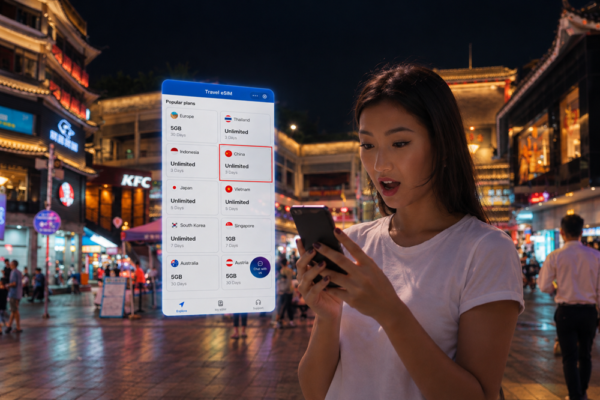
Travel eSIM prices vary depending on your destination, data allowance and trip duration. For Malaysian travellers, Travel eSIM, offered by TNG eWallet, provides different data packages, including smaller fixed-data allowances such as 1GB and unlimited options for travellers who expect to use more mobile data.
For example, the following unlimited Travel eSIM packages were shown in TNG eWallet.
| Destination | Unlimited data validity | Price |
| Japan | 5 days | RM27.50 |
| Thailand | 3 days | RM15.40 |
| China | 3 days | RM19 |
Prices are based on TNG eWallet provided in October 2026 and may change. Unlimited plans may be subject to fair-use policies or speed restrictions. Check the latest package details in TNG eWallet before purchasing.
If you mainly use mobile data for maps, messaging and occasional browsing, a smaller fixed-data package may be sufficient.
However, if you frequently stream videos, upload content or share your internet connection with other devices, an unlimited plan may be worth considering.
The packages shown also highlight 5G connectivity, hotspot sharing and data-usage tracking. Actual speeds, coverage, hotspot availability and fair-use conditions depend on the selected package and local network.
You can compare available Travel eSIM packages through TNG eWallet before choosing a plan that suits your itinerary.

What to check before buying a travel SIM
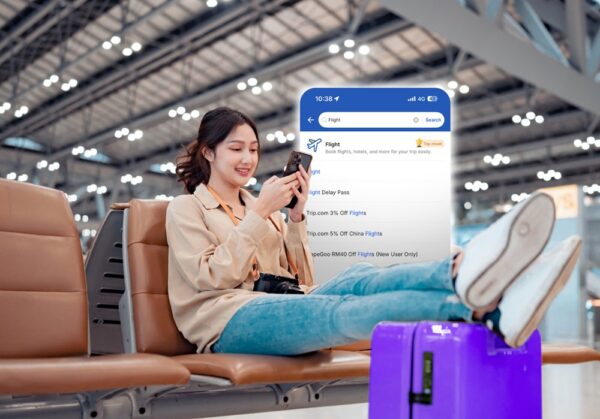
Choosing between an eSIM and a physical SIM becomes easier when you consider how you’ll use your phone overseas. Your destination, travel duration, data usage and budget can all influence which option offers better value. If you’re still planning your trip, exploring ways to get cheap flights can help you manage your travel expenses before comparing mobile data packages.
Estimate how much mobile data you need
Your data requirements depend on your travel habits. If you mainly use maps, messaging and occasional searches, a smaller package may be sufficient. If you regularly watch videos, upload photos, work remotely or use your phone as a hotspot, consider a larger allowance. Be careful with unlimited plans because some providers apply fair-use restrictions or reduce speeds after a certain amount of usage.
Compare validity with your travel dates
A seven-day package is not necessarily suitable for an eight-day holiday. Check when the plan starts, whether validity is counted in calendar days or 24-hour periods and what happens when the package expires. For multi-country trips, confirm whether the same plan remains valid when you cross borders.
Check your phone’s compatibility
Before purchasing a travel eSIM, confirm that your phone supports eSIM technology and is carrier-unlocked. If your device does not support eSIM, a physical SIM may be the simpler option.
Consider whether you need a local number
If you only need mobile data for navigation, messaging and bookings, a data-only travel eSIM may be sufficient. However, if your trip requires local calls or SMS verification, compare packages that include those services.
Review coverage and activation conditions
Before paying, check the supported mobile networks, validity period, activation requirements and any hotspot restrictions. For multi-country trips, confirm whether your package covers every destination on your itinerary.
Get connected before departure with Travel eSIM
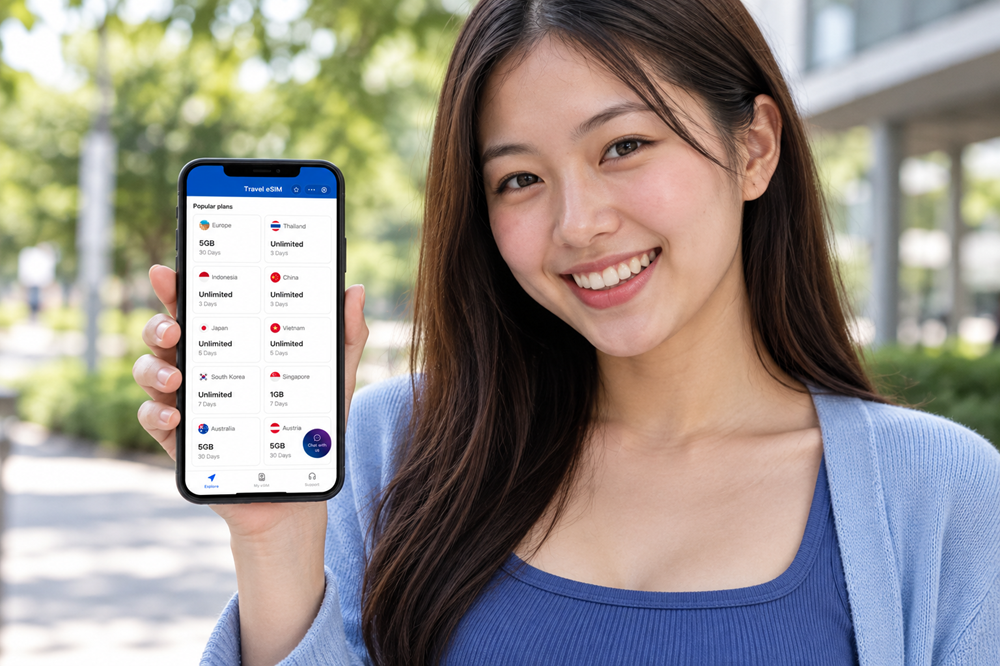
If you prefer arranging your travel essentials before flying, TNG eWallet’s Travel eSIM offers a convenient way to purchase international mobile data packages digitally. Instead of searching for a physical SIM after landing, you can choose a destination, compare available packages and install a compatible travel eSIM before departure.
How to purchase and install a Travel eSIM
You can generally arrange your Travel eSIM through the following steps.
- Open TNG eWallet and find Travel eSIM.
- Select your travel destination.
- Compare the available data packages and validity periods.
- Choose a suitable package and complete your purchase.
- Follow the installation instructions provided for your device.
- Upon arrival, select the travel eSIM for mobile data and check the required network settings.
Installation methods may vary depending on your phone. Some devices support QR code installation, while others may offer additional setup methods. You can refer to the official Travel eSIM installation and setup instructions before travelling.
Important things to check before departure
Before purchasing, make sure your phone supports eSIM and is carrier-unlocked. The Travel eSIM purchased through TNG eWallet states that the eSIM must be installed and activated within 30 days of purchase. Otherwise, it expires and cannot be activated, used or refunded. The data package validity begins when the eSIM activates at the destination. You should also check the selected package’s coverage, supported networks, hotspot availability and fair-use conditions.
If you are travelling to a destination with internet restrictions, such as mainland China, do not assume that every travel eSIM provides unrestricted access to international websites or apps. Availability may depend on network routing and local restrictions.
Downloading important travel documents, booking confirmations and offline maps before departure is a useful precaution.
Common SIM mistakes to avoid when travelling
Even after choosing the right SIM, a few overlooked details can make staying connected overseas more difficult.
Buying an eSIM without checking compatibility
Not every phone supports eSIM technology. Check your exact device model and whether it is carrier-unlocked before purchasing a travel eSIM.
Accidentally using Malaysian roaming data
Keeping your Malaysian SIM active may be useful for receiving messages, but it can also result in unexpected roaming charges. Make sure your travel eSIM is selected for mobile data and review the roaming settings on your Malaysian line.
Assuming unlimited data always means full-speed internet
Some unlimited packages apply fair-use policies or reduce speeds after a certain usage threshold. Check these conditions before purchasing, especially if you plan to stream videos or share mobile data.
Forgetting about activation and expiry dates
Different providers have different installation, activation and validity requirements. Check these details before buying so your package remains usable throughout your trip.
Deleting an installed eSIM too early
Avoid deleting your travel eSIM profile unless the provider instructs you to do so. Some eSIM profiles cannot be reinstalled freely after deletion, which may require additional support or a new purchase.
Choose the right connection for your next trip
When comparing eSIM vs physical SIM for travel, the best choice depends on your phone, destination and how you plan to stay connected. For most short overseas holidays, a travel eSIM is often more convenient because you can prepare your mobile data before departure and avoid swapping SIM cards after landing. A physical SIM may be more suitable if your phone does not support eSIM, you need a local number or you are planning an extended stay.
Whichever option you choose, compare the total cost, data allowance, validity, network coverage and calling features before making a decision. If you prefer arranging your mobile connection before flying, explore Travel eSIM options available in TNG eWallet and choose a suitable package for your next overseas journey.
FAQs
Is eSIM better than a physical SIM for international travel?
An eSIM is often more convenient for international travel because it can be installed digitally before departure. However, a physical SIM may be more suitable if you need a local phone number, have an incompatible device or are staying overseas for an extended period.
Is an eSIM cheaper than a physical SIM?
Not necessarily. Prices depend on the destination, provider, data allowance, validity and included services. Compare the total package cost rather than assuming one option is always cheaper.
Can I use an eSIM and a physical SIM at the same time?
Yes, on compatible dual-SIM devices. You may be able to use a travel eSIM for mobile data while keeping your Malaysian physical SIM active for calls and SMS. Actual functionality depends on your device and mobile operator.
Can I receive Malaysian banking OTPs while using a travel eSIM?
You may be able to receive SMS OTPs if your Malaysian line remains active and supports SMS reception overseas. However, delivery is not guaranteed, and roaming charges may apply to certain services.
Does a travel eSIM come with a phone number?
Some travel eSIMs include a phone number, calls and SMS, but many are data-only. Check the package details before purchasing if you need ordinary cellular calls or local SMS verification.
Does an eSIM have better internet speed than a physical SIM?
No. An eSIM does not automatically provide faster internet. Connection speed depends on the local network, coverage, device capabilities, congestion and package restrictions.