May 22 2026
Is it the right time to buy an EV in Malaysia?
by Haziq
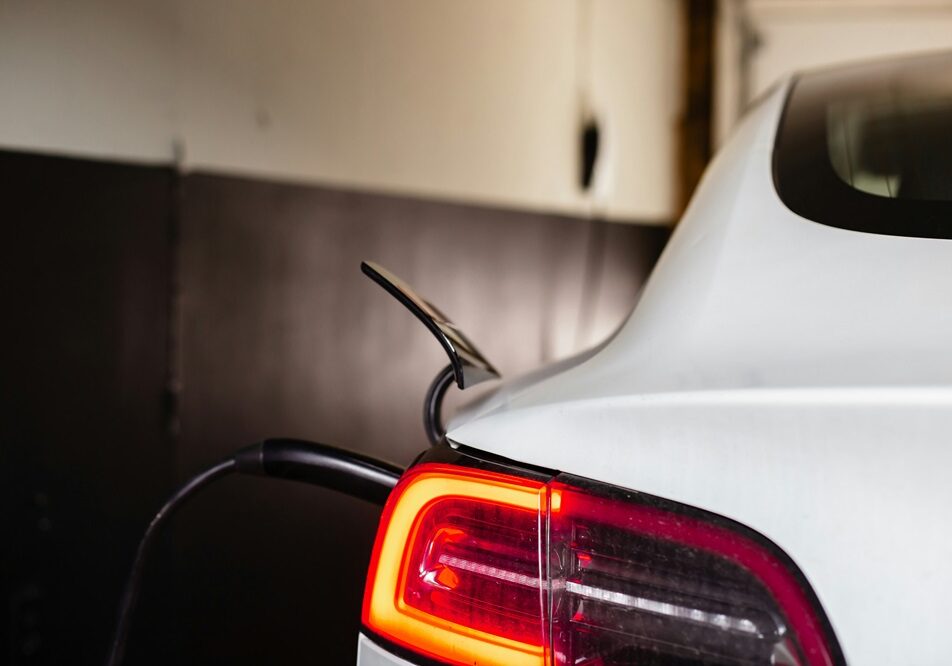
Fuel prices are on the rise, and it doesn’t look like they’re coming down anytime soon. With ongoing instability in the Middle East disrupting global oil supply, the World Bank projects that energy prices will surge by 24% in 2026, the highest since 2022. This means that in Malaysia, unsubsidised RON95 is currently sitting at RM4.02 per litre and RON97 crossing RM5 per litre as of April 2026.
It’s no surprise, then, that the question on everyone’s mind is: should I switch to an electric vehicle?
If you’re considering making the move, this guide breaks down everything you need to know — from upfront costs and electric vehicle (EV) charging availability, to the BUDI95 subsidy and whether the numbers actually make sense for your lifestyle. No fluff, just the full picture.
Are EVs cheaper than the cars Malaysians actually buy?
The first thing we have to consider might be the most basic when it comes to purchasing a vehicle: How much does an EV cost? To put things in perspective, let’s first look at the top 5 best-selling cars in Malaysia in 2024, based on JPJ registration data:
| Rank | Model | Approx. price range |
| 1 | Perodua Bezza | RM40,500 – RM55,000 |
| 2 | Perodua Axia | RM38,000 – RM49,500 |
| 3 | Perodua Myvi | RM45,700 – RM59,900 |
| 4 | Proton Saga | RM38,000 – RM49,000 |
| 5 | Perodua Alza | RM62,500 – RM75,500 |
These are the cars that ordinary Malaysians such as families, fresh graduates, daily commuters are buying. They are affordable, practical, and widely serviced. The price range sits between roughly RM38,000 and RM75,500.
Now let’s look at where EVs stand today.
The cheapest EV currently available in Malaysia is the Proton e.MAS 5, which starts from RM59,800 (or RM56,800 with the launch rebate). That puts it roughly in line with a top-spec Myvi or a mid-range Alza, which to be fair, is genuinely groundbreaking for an EV in this market.
Beyond that, the most accessible EVs in Malaysia today include:
- Proton e.MAS 5: from RM59,800 (225–325 km range)
- Proton e.MAS 7: from RM105,800 (410 km range)
- BYD Atto 2: from RM100,000 (350 km range)
- BYD Dolphin: from RM99,900 (340–427 km range)
- BYD Atto 3 Ultra: RM123,800 (420 km range)
So the short answer to “is there an EV in the price range of the top 5 best-selling internal combustion engine (ICE) cars?” is: almost. The Proton e.MAS 5 breaks through that RM60k barrier, but the majority of EVs still sit significantly above what most Malaysians typically spend on a car. A Perodua Bezza buyer, who is paying around RM45,000, is still looking at a minimum 30% price premium to get into even the most affordable EV today.
That gap might be narrowing fast, but it hasn’t closed yet.
What are the factors to consider before getting an EV?
Before we dive in, let’s walk through everything that actually matters — running costs, charging, maintenance, insurance, and the questions most EV articles conveniently skip.
Fuelling costs: EV cars vs petrol cars
Let’s run the numbers on a typical Malaysian daily driver covering around 30–40 km a day, or roughly 1,000 km a month.
Petrol car (e.g. Perodua Myvi, ~15 km/litre fuel efficiency)
- 1,000 km ÷ 15 km/L = ~67 litres/month
- At BUDI95 rate of RM1.99/litre: ~RM133/month
- At unsubsidised RON95 (Current rate: RM4.02/litre): ~RM269/month
EV charged at home (e.g. Proton e.MAS 5, ~15 kWh/100 km)
- 1,000 km × 0.15 kWh/km = ~150 kWh/month
- At TNB home tariff of ~RM0.30–0.47/kWh: ~RM45–RM70/month
Even at the cheapest subsidised petrol rate under BUDI95, the EV is significantly more affordable to run on a monthly basis. If you are not eligible for BUDI95 or if the global oil crisis continues to push market prices higher, the savings become even more compelling.
Over five years, a home-charging EV owner could save between RM4,000 and RM12,000 in fuel costs alone — depending on BUDI95 eligibility and global oil price movements.
Maintenance costs
EVs have roughly 20 moving parts in their powertrain, compared to over 2,000 in a typical internal combustion engine (ICE) vehicle. That means no engine oil changes, no timing belts, no spark plugs, and no radiator flushes. Routine EV maintenance is largely limited to brake fluid, cabin air filters, tyre rotations, and coolant top-ups.
For a typical family car, annual ICE service costs can run between RM800–RM2,000 depending on mileage and model. EV servicing, by contrast, tends to be lower — though this varies by brand and model. BYD, for example, includes free service packages with many of its current models.
One caveat: tyres. EVs are heavier due to their battery packs, and the instant torque delivery means they can wear tyres faster — potentially up to 20% quicker than a comparable petrol car. As a comparison, while petrol cars might see 25,000 to 40,000KMs of usage for their tyres, EV cars might only get 15,000 to 30,000KMs for the same tyres. Budget accordingly.
How much does it cost to replace an EV battery?
Most EV batteries come with warranties of 8 years or 160,000 km. Under normal usage, batteries are expected to retain around 70–80% of their original capacity over this period.
However, should the battery need replacement outside warranty — or after many years of use — the cost is significant. For mid-range EVs in Malaysia, battery replacement is estimated at RM40,000–RM80,000, though costs are expected to come down as battery technology matures and local supply chains develop. This is a long-term consideration, especially for buyers planning to keep a car for 10+ years.
And truthfully, it’s hard to pin down the actual battery replacement cost for now, due to the lack of authoritative sources, and the lack of battery replacement outside of warranty coverage in Malaysia right now. And while battery replacement remains a significant cost, prices are falling globally, and most owners are comfortably within their warranty window.
A recent study by Canadian technology company Geotab, analysing data from 10,000 electric vehicles, reveals that battery degradation doesn’t happen as fast as expected, with an average of just 1.8% per year. At that rate, an EV battery can maintain their performance beyond 20 years, potentially outlasting the EV’s body itself.
Should I still buy an EV if I can’t charge at home?
The easy answer is, if you can charge at home, an EV will almost certainly save you money in the long run. If you can’t, the savings are still there but smaller, and for now, it takes more planning.
Home charging: the sweet spot
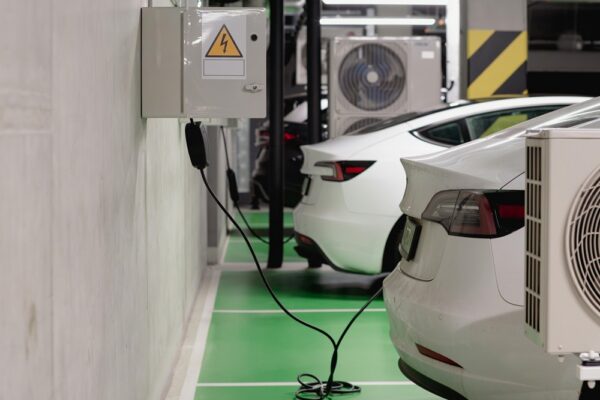
If you own your home or have dedicated parking with an electrical point, home charging is a game-changer. Plugging in overnight with a standard 7 kW wallbox charger costs a fraction of what petrol might cost you. As mentioned in our calculations above, a 60 kWh EV battery can be fully charged at home for approximately RM45–RM70, giving you 400+ km of range.
Installing a home wallbox charger typically costs RM1,500–RM5,900, depending on the unit and installation complexity. There is also a RM2,500 personal income tax relief available for EV charger purchase and installation (valid until the 2027 assessment year), which helps offset the upfront cost.
Public charging: faster, but more expensive
Public DC fast chargers are convenient, especially on road trips, but they come at a premium. Current market rates:
- AC slow chargers: RM0.60–RM1.15 per kWh
- DC fast chargers: RM1.00–RM1.80 per kWh
A full charge on a 60 kWh EV at a DC fast charger could cost you RM60–RM108. At those rates, you’re closing in on the cost of a tank of unsubsidised petrol — which largely defeats the purpose.
This is also where apartment and condo dwellers need to think carefully. Many condominiums and apartments in Malaysia do not yet offer EV charging facilities, and retrofitting shared car parks with charging infrastructure is a slow, committee-dependent process. If you cannot charge at home and depend entirely on public charging, the economics become less clear-cut — and you’ll need to factor in time too: a DC fast charge from 20% to 80% typically takes 30–60 minutes, versus five minutes at a petrol station refueling your ICE car.
However, it isn’t all doom and gloom for people who are living in apartments and condominiums. Although the infrastructure might not be there yet, the infrastructure is growing fast. As of September 2025, over 4,100 public charging points had been installed nationwide, in support of the government’s target of 10,000 EV charging stations under the Low Carbon Mobility Blueprint 2021–2030. More are being added monthly, and shopping malls, office buildings, and highway rest stops are increasingly well-covered. The apartment EV ownership question looks very different today than it will in two or three years.
The verdict: if you can charge at home more than 80% of the time, an EV makes strong financial sense. If you live in an apartment with no charging facilities and rely primarily on public DC fast chargers, the savings are significantly diminished, for now.
Is EV road tax and insurance more expensive?
Another aspect of running costs that are often overlooked is the cost of road tax and car insurance of EV compared to ICE vehicles.
Road tax
EV road tax in Malaysia was fully exempted at one point but from 1 January 2026, a new tiered structure based on motor power output (kilowatts) was introduced.
The good news: the Ministry of Transport and JPJ have implemented a new tiering system. The good news: the new structure is based on your EV’s motor power output in kilowatts (kW), and rates are on average 85% lower than the old EV road tax rates. To put it in real numbers: a BYD Atto 3 pays RM160 per year in road tax, cheaper than the Honda CR-V 1.5T, which is a comparable car at the same price range at RM180 per year. For most everyday EVs, road tax is unlikely to be a deciding factor either way.
Insurance
EV insurance is more expensive than petrol car insurance, and this is a point many EV cost calculators gloss over.
Why? A few reasons:
- Higher vehicle value: EVs generally cost more to purchase, which pushes the insured value — and thus the premium — higher.
- Battery replacement costs: A damaged EV battery can cost RM30,000–RM80,000 to replace. Insurers price this risk into the premium.
- Repair complexity: The General Insurance Association of Malaysia (PIAM) has found that accident damage on electric vehicles can be a lot more complex and expensive to repair. In fact, depending on the location of the damage, the cars may have to be written off.
- Workshop availability: Not every workshop in Malaysia is equipped to handle EV repairs, which can push labour and parts costs higher.
Currently, EV insurance premiums in Malaysia are roughly 10–15% higher than equivalent ICE vehicles, though this varies by insurer, model, and declared value. For more affordable EVs like the e.MAS 5, the absolute premium difference may be a few hundred ringgit per year.
However, as PIAM has noted, EV insurance costs in more mature and open markets are significantly higher due to greater risks and expenses associated with repairs and parts replacement. Malaysia is still in a phased liberalisation stage for motor insurance, meaning premiums here are still somewhat regulated. As the market matures, expect insurance costs for EVs to gradually increase — this is something to factor into your long-term ownership cost calculations.
When shopping for EV insurance, look for policies that specifically cover:
- Battery damage and degradation
- Home charger equipment
- EV-specific roadside assistance (standard towing can damage an EV)
Other considerations
Beyond the numbers, there’s a policy dimension that every prospective EV buyer in Malaysia needs to be aware of right now.
In May 2026, the Ministry of Investment, Trade and Industry (MITI) officially confirmed new regulations for fully imported (CBU) electric vehicles, effective 1 July 2026. Under the new framework, all new CBU EV imports must meet a minimum Cost, Insurance and Freight (CIF) value of RM200,000 and a minimum motor output of 180 kW (equivalent to 245 PS). In practice, this effectively pushes the retail price floor for most imported EVs to above RM300,000, significantly narrowing the sub-RM150,000 segment that had been driving mainstream EV adoption over the past two years.
The stated goal is to encourage foreign carmakers to commit to local assembly (CKD) operations in Malaysia rather than relying on fully imported units. Locally assembled EVs — including the Proton e.MAS 5 and e.MAS 7, the Wuling Bingo, and the Volvo EX30 — are unaffected by the new rules.
What does this mean for you as a buyer? A few things:
- If you’re eyeing a CBU EV currently priced below RM150,000, such as certain BYD models, act sooner rather than later. Existing stock and units already in transit are exempt from the new ruling, but new shipments post-July 2026 will be subject to the higher entry requirements — which will inevitably push prices up or remove those models from the market altogether.
- Locally assembled EVs remain your safest long-term bet for affordability and parts availability, and the pipeline for CKD EVs in Malaysia is growing.
- Policy uncertainty is real. MITI’s CBU EV policy has been revised multiple times in the span of just a few months, which makes long-term planning difficult. This isn’t a reason to avoid EVs — but it is a reason to stay informed and not assume today’s prices and model availability will persist indefinitely.
On a broader note, resale value is also worth thinking about. The EV resale market in Malaysia is still maturing, and depreciation on some models, particularly early-generation imported EVs has been steep. As the market develops and more Malaysians become familiar with EVs, resale values are expected to stabilise. For now, if resale value matters to you, locally assembled models from established brands with strong service networks tend to hold their value better.
Paying for charging just got easier with TNG eWallet
One of the biggest frustrations for EV drivers in Malaysia used to be the sheer number of apps required — different charging networks, different payment methods, different accounts. That friction is being solved.
TNG Digital has rolled out a new EV Charging feature within the TNG eWallet, making it one of the few platforms that allows drivers to locate, activate, and pay for charging across multiple charge point operators (CPOs) in Malaysia and Singapore, all through a single app.
Powered by Voltality, a wholly owned subsidiary of Beep, this feature connects users to various EV charging networks in Malaysia and Singapore without separate operator apps. Payments are quick and secure via TNG eWallet, with automatic deductions from the eWallet with no card entry, separate top-ups, or multiple accounts required. Any unutilised balance is automatically refunded to the user’s TNG eWallet account almost instantly.
To use it, simply open your TNG eWallet, find the EV Charging icon (or search for it using the universal search bar), locate your charger on the map or scan its QR code, plug in, and you’re charging. Payment is deducted automatically from your TNG eWallet balance when the session ends.
At launch, the feature connected users to over 6,000 charging points across 1,700 locations in Malaysia and Singapore, covering operators including Charge+, Kineta, JusEV, RExharge, EVlution, ZuraCharge, as well as DC Handal, where TNG eWallet was the first e-wallet to enable QR payment on contactless charging terminals.
For EV owners who don’t want to manage five different charging apps, this is a meaningful quality-of-life improvement.
So, should you switch to an EV?
Now after all that, let’s finally answer the burning question: Should you get yourself an EV? Well, the answer is yes, but only if:
✅ You can charge at home. This is the single biggest factor. If you have a landed property or a condo with EV charging, you will almost certainly save money over the long run.
✅ You drive mostly within urban areas and your daily mileage is predictable. Most EVs available in Malaysia offer 225–420 km of WLTP (Worldwide Harmonised Light Vehicle Test Procedure) Range. For typical Klang Valley or other city daily driving, range anxiety is rarely an issue.
✅ You are buying a second car or have access to a petrol car for longer trips. The EV becomes your daily driver; the ICE car handles the occasional outstation journey until charging infrastructure catches up.
✅ You plan to hold the car for five or more years. The upfront cost premium pays off over time through fuel and maintenance savings.
✅ You don’t qualify for BUDI95 or are exposed to unsubsidised fuel prices. At RON95’s current market rates of RM3.02/litre or RON97 at RM5.10/litre, the running cost savings from an EV are dramatic.
An EV may not be the right fit for you yet if:
❌ You live in an apartment with no home charging option. Public-only charging is more expensive and less convenient.
❌ You frequently drive long interstate routes and cannot plan charging stops. Fast charging is improving, but charging time is still a consideration.
❌ Your budget is under RM55,000. There is currently no EV available below this threshold in Malaysia.
❌ You need maximum payload or towing capacity. ICE vehicles, particularly diesel variants, still hold an advantage here.
Make sure you’re getting the most out of BUDI95
While fuel prices remain volatile and global oil supply disruptions continue, maximising your RON95 subsidy is important.
The BUDI95 programme entitles eligible Malaysians with a valid MyKad and driving licence to purchase RON95 at RM1.99 per litre, with a monthly quota of 200 litres. The easiest way to claim it? Through TNG eWallet.
Here’s how it works:
- Open your TNG eWallet and make sure your account is verified (eKYC with your MyKad and a selfie — it’s a one-time process)
- On the home screen, tap the BUDI95 icon
- Select your petrol station and pump number
- Enter the amount, tap Pay Now, and a QR code will be generated
- Show the QR code to the station attendant — the pump activates at RM1.99/litre
With TNG eWallet’s BUDI95 feature, there’s no need to bring your MyKad every time you fill up as your identity is already verified in the app through the eKYC processFurtheremore, any unused balance from the pre-paid amount is automatically refunded to your TNG eWallet within minutes, so you can fill up without worrying about overpaying. And yes, you still earn GOrewards points on eligible BUDI95 transactions.
The BUDI95 feature in TNG eWallet works across almost every petrol station brands, while some other apps like Setel are Petronas-specific. That cross-brand flexibility makes TNG eWallet the most convenient way to manage your fuel subsidy.
The bottom line
Global energy markets are more volatile than they have been in years, and the structural case for EVs in Malaysia has never been stronger. Fuel savings are real, maintenance costs are genuinely lower, the charging network is expanding, and for the first time, EVs are available at price points that were previously unthinkable in Malaysia, starting from RM59,800 for the Proton e.MAS 5.
But EVs are not a blanket right answer for every Malaysian. Home charging access, driving patterns, upfront budget, and insurance costs all matter. The best time to buy an EV is when you can honestly tick most of the boxes above.
What’s clear is that the gap between EV ownership and ICE ownership in terms of cost, convenience, and capability is closing faster than most people expected. The next year or two will be significant.
In the meantime, whether you’re filling up at the pump or plugging in at a charger, TNG eWallet has you covered. Use BUDI95 in your TNG eWallet to claim your subsidised RON95 at RM1.99/litre, and if you already drive an EV, use the EV Charging feature to locate and pay for charging across 6,000+ charging points in Malaysia and Singapore — all without switching apps.